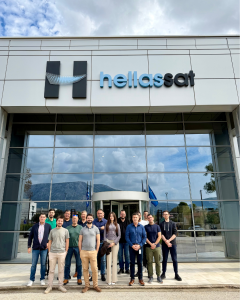
Hellas Sat hosts SCOTSS consortium meeting with hands-on mixed reality demonstration
Koropi, 16 October 2026
Hellas Sat welcomed the partners of SCOTSS – SChool Of Tomorrow Space and Social inclusion to its facilities in Koropi for a full-day consortium meeting. SCOTSS is funded by the European Space Agency (ESA) under ESA Space Solutions.
The meeting brought together the project consortium: Cloud Signals (coordinator), Ellinogermaniki Agogi, the University of the Aegean, OTE, Omega Technology, the University of Piraeus Research Center and Hellas Sat. The partners tested the latest version of the SCOTSS platform, prepared the upcoming school activities and agreed on the next steps.
About SCOTSS
SCOTSS brings space into the classroom. The project combines satellite and 5G connectivity with immersive digital tools to give students, including those in remote and underserved areas, access to high-quality STEM education built around space topics such as satellite communications, Earth observation and human spaceflight.
In its first phase, SCOTSS piloted educational scenarios in schools in Greece and Italy. The project is now extending the platform with three new elements: educational nano-satellite modules, multi-user mixed reality experiences, and advanced wireless connectivity for schools through 5G Fixed Wireless Access, Wi-Fi mesh networks and backup connectivity.
Hands-on mixed reality demonstration
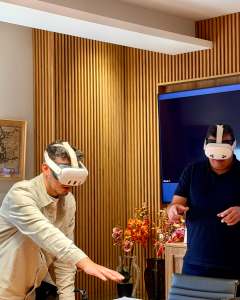
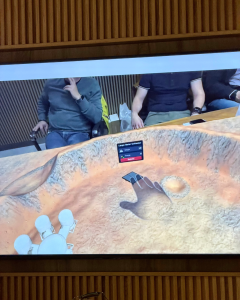
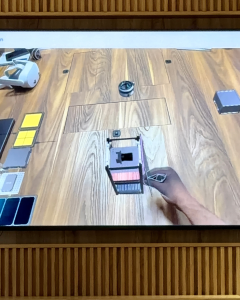
The highlight of the day was a live demonstration of the SCOTSS mixed reality platform on Meta Quest 3 headsets. Partners stepped into the role of students and tried out:
- Mars Colony: a collaborative mission in which students work together to build a habitat on Mars, balancing food, water, oxygen and energy so that as many people as possible can live there safely;
- Nano-satellite builder: a module in which students assemble a small CubeSat satellite for a mission such as forest fire monitoring, choosing the right components and learning the constraints of real satellite design;
- AI Space Tutor: a voice-enabled assistant that answers students’ questions during the mission and gives hints rather than ready-made answers.
Several headsets can share the same session, so students see the same virtual objects and work on the mission together. The session also served as a rehearsal of the demonstrations planned for teachers and schools.
Preparing the school pilots
The consortium also prepared its visit to the participating schools in Samos on 20 October and discussed online onboarding webinars and short scenario guides for teachers, certificates of participation for teachers and schools, and outreach to additional schools in Greece and Italy. The pilot phase in schools is planned for January to April 2027.
Hellas Sat’s role
As the satellite operator in the consortium, Hellas Sat provides satellite capacity and connectivity for schools in remote areas, hosts SCOTSS platform services in its data center, and contributes to the project’s resilient connectivity solutions. At the end of the meeting, partners toured the Hellas Sat Satellite Control Centre, the teleport antenna park and the data center facilities that host the SCOTSS platform.